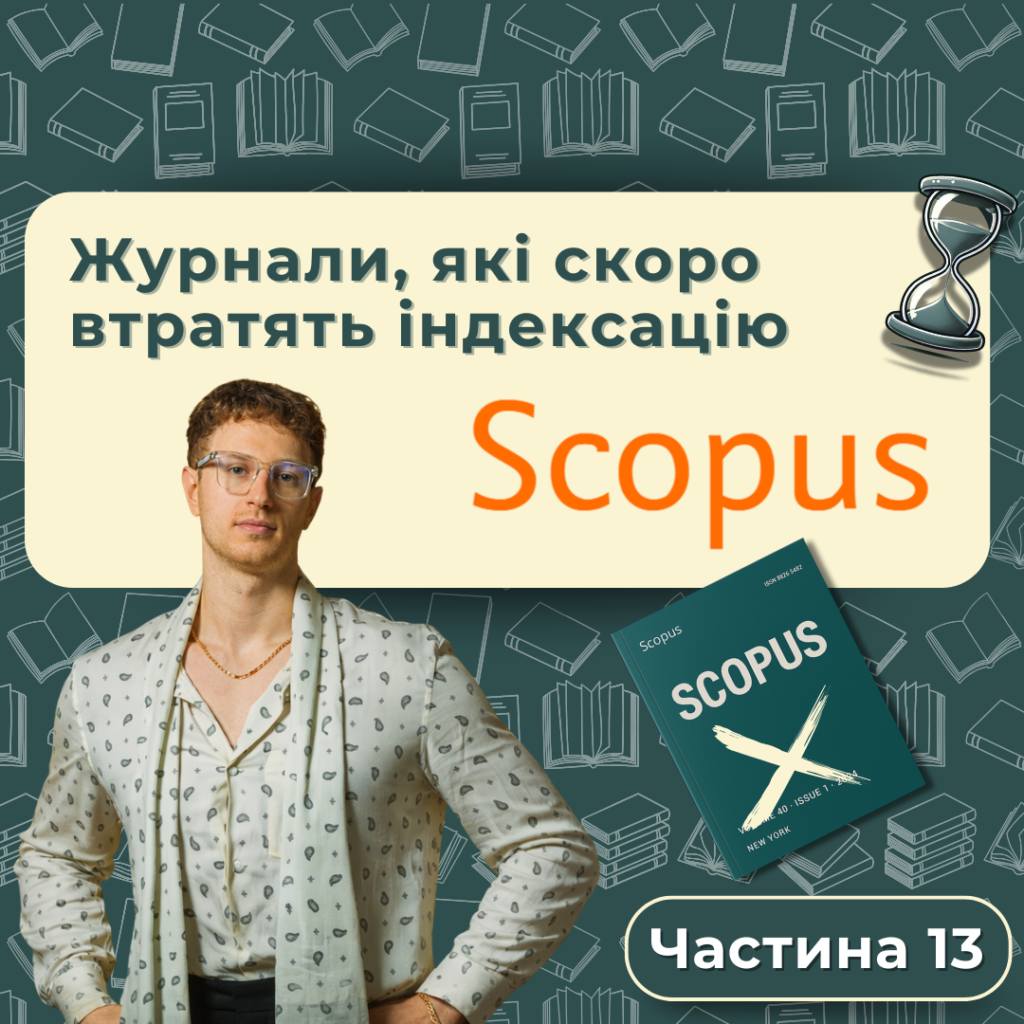
Good afternoon, dear colleagues!
With you Vasyl Malets – director of the Academy of Articles and author of the column «Candidates for departure from Scopus»! Last year, our column became very popular among Ukrainian and Kazakh scientists.
In 2025, you'll find six in-depth articles about journals on the verge of being delisted from Scopus. And we're starting this year's first issue with an analysis of five such journals.
This time we will consider five magazines, which risk losing indexing in Scopus, and three of them have published many articles by Ukrainian scientists:
The first journal on our list made it to Scopus due to its unique topic – the Sustainable Development Goals (SDGs).
However, immediately after inclusion in Scopus, it began actively sending out announcements about the possibility of early publication. At the same time, the journal used an interesting trick: after accepting articles, it required authors to add a mention of the SDGs in the title and abstract so that the articles formally corresponded to the declared topic.
Features of the magazine:
- Q0 from the right;
- Accepted by Scopus in 2024.
Main violations:
- Increasing the number of publications per year. 300 in 2024 and already over 300 as of January 2025.
- Publishing everything in a row with the trick of adding SDG's to the title.
Number of Ukrainians who have been published in this magazine: more than 115 Ukrainian scientists
Current status:
The journal is being actively indexed, but it is only a matter of time before it is reviewed by the Radar system and subsequently by the CSAB board.
Probability of exclusion from Scopus: 100%
Probability of deindexing (removal from the Scopus database) of articles:
- 50% – for 2025;
- 20% for 2024.
This journal was added to Scopus in December 2023 and has been publishing quality articles throughout 2024. However, it has now been subject to CSAB review and appears to have decided to accept all articles indiscriminately before possible exclusion.
Features of the magazine:
- Q4 – psychology;
- Adopted in December 2023;
Main violations: In my expert opinion, when the journal was accepted into Scopus, it was given a year to improve the quality of the publication, and that is probably why re-checking was introduced:
- A large number of self-citations – over 50%
- A large number of published articles in 2025
Number of Ukrainians who have been published in this magazine: 50+;
Probability of exclusion from Scopus: 100%;
Probability of deindexing (removal from the Scopus database) of articles: 0% – indexed articles will not be deleted from the database when the journal is turned off.
Current status:
The journal is under review by the CSAB board and will soon be removed from Scopus. All unindexed articles will not be indexed with a probability of 100%.
It was a high-quality journal that strictly adhered to peer review and limited the number of publications. However, in the fall of 2024, it changed course dramatically and began publishing a large number of articles for money, which significantly affected its reputation and scientific value.
Features of the magazine:
- Q4 – public health;
- Indexed in Scopus since 2019
Main violations:
- A sharp increase in the number of published articles.
- Lack of peer review;
- A large number of published issues and special issues.
Number of Ukrainians who have been published in this magazine: 50+
Probability of exclusion from Scopus: 100%.
Probability of deindexing (removal from the Scopus database) of articles: 10% – indexed articles will probably not be removed from the database when the journal is excluded, but all published unindexed articles will not be indexed.
Current status:
The journal is under review by the CSAB board and will soon be removed from Scopus. All unindexed articles will not be indexed with a probability of 100%.

The journal was accepted into Scopus in 2009. During that time, it strictly followed the rules and published no more than 40 articles per year. However, in 2024, the situation changed dramatically.
Perhaps this is due to the desire to make a profit or the journal was sold. In 2024, it published over 500 articles, significantly exceeding its previous figures.
Features of the magazine:
- Q4 – Mathematics;
- Indexed in Scopus since 2009.
Main violations:
- A sharp increase in the number of published articles;
- Lack of peer review;
- A large number of published issues and special issues;
Number of Ukrainians who have been published in this magazine: 0
Probability of exclusion from Scopus: 100%
Probability of articles being deindexed (removed from the Scopus database): 70%
Current status:
The journal is under review by the CSAB board and will soon be removed from Scopus. All unindexed articles will not be indexed with a probability of 100%.
This is a fairly old journal that has been publishing articles since 1998. In 2018, it was indexed in Scopus and has maintained a proper level of publication quality throughout this time.
However, in 2024, the magazine was sold, and the new owners decided to use its status primarily for commercial gain, which significantly affected the quality of the published materials.
Features of the magazine:
- Q3 – Pathology and Forensic Medicine;
- Indexed in Scopus since 2018.
Main violations:
- A sharp increase in the number of published articles;
- Lack of peer review
- A large number of published issues and special issues.
Number of Ukrainians who have been published in this magazine: 15+
Probability of exclusion from Scopus: 100%
Probability of deindexing (removal from the Scopus database) of articles: 0%
Current status:
The journal is under review by the CSAB board and will soon be removed from Scopus. Indexed articles will not be removed, but all unindexed articles will be unindexed with a probability of 100%.
Conclusions
Today I have analyzed five scientific publications in detail and outlined the problems of each of them. I hope this information will help you save time, money, and nerves.
I understand that the possibility of quick publication may seem very attractive, but it is important to always consider the possible consequences. Unfortunately, there are situations when the journal in which you published an article initially met all the requirements, but later began to violate scientific standards. No one is immune from this. However, you should not be upset - this is a valuable experience.
Carefully analyze publications before submitting materials, check their reputation to avoid losses. And if you need professional help in choosing a journal or publishing a scientific article, the Academy of Articles will be happy to help you.
Sincerely,
Vasyl Malets — Director of the Academy of Articles
Join my personal LinkedIn!
There I share relevant and useful information about scientific publications.